

Flexible or Improperly Installed Dryer Exhaust Pipe
The Importance of Properly Installed Dryer Vents
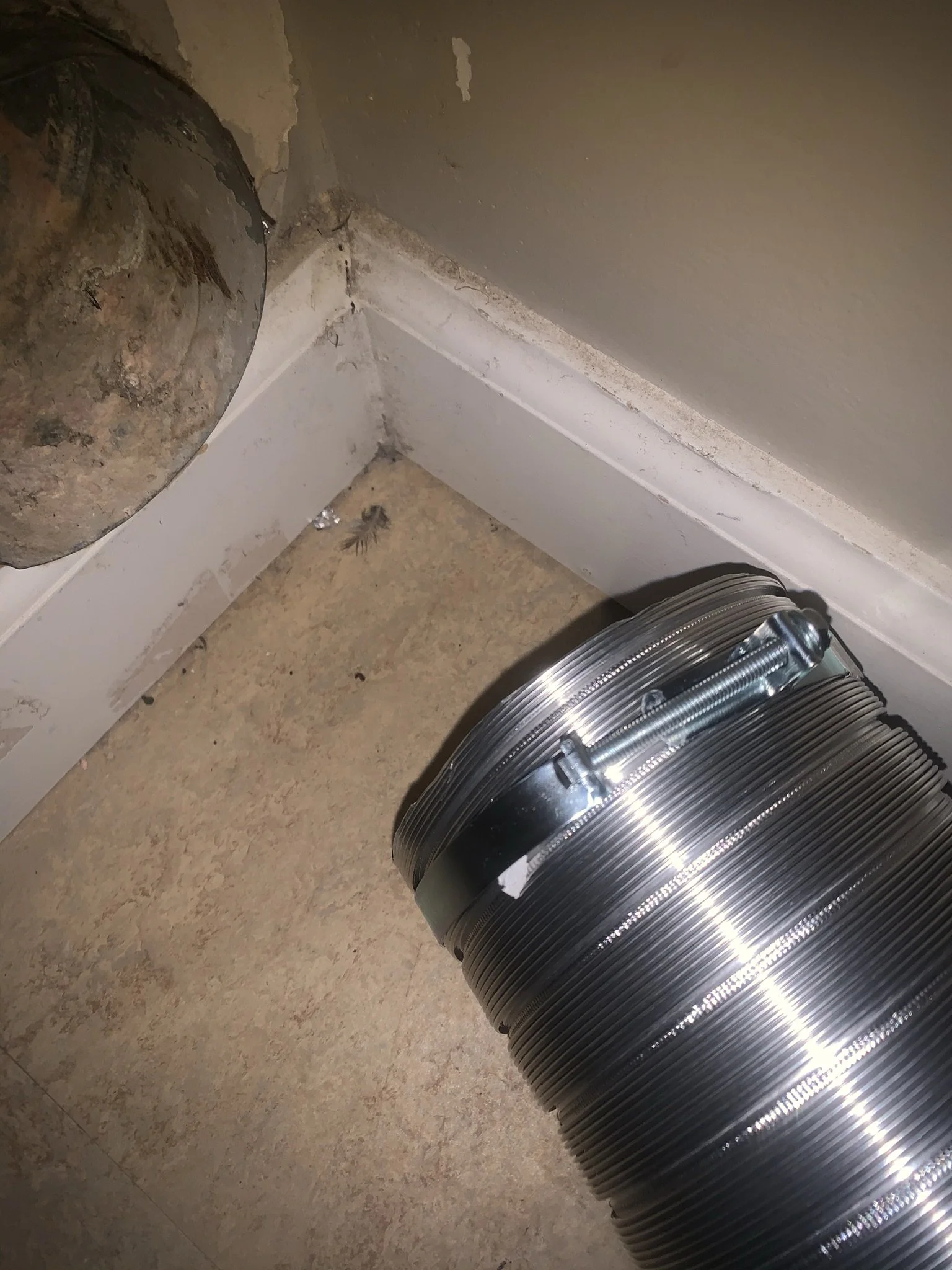
When it comes to household safety and efficiency, one often overlooked aspect is the proper installation of dryer vent runs. Many homeowners are unaware of the critical importance of using rigid materials, maintaining the recommended length, and ensuring all connections are securely taped. Properly installed dryer vent runs are crucial for preventing a host of potential problems that can arise from improper installation.
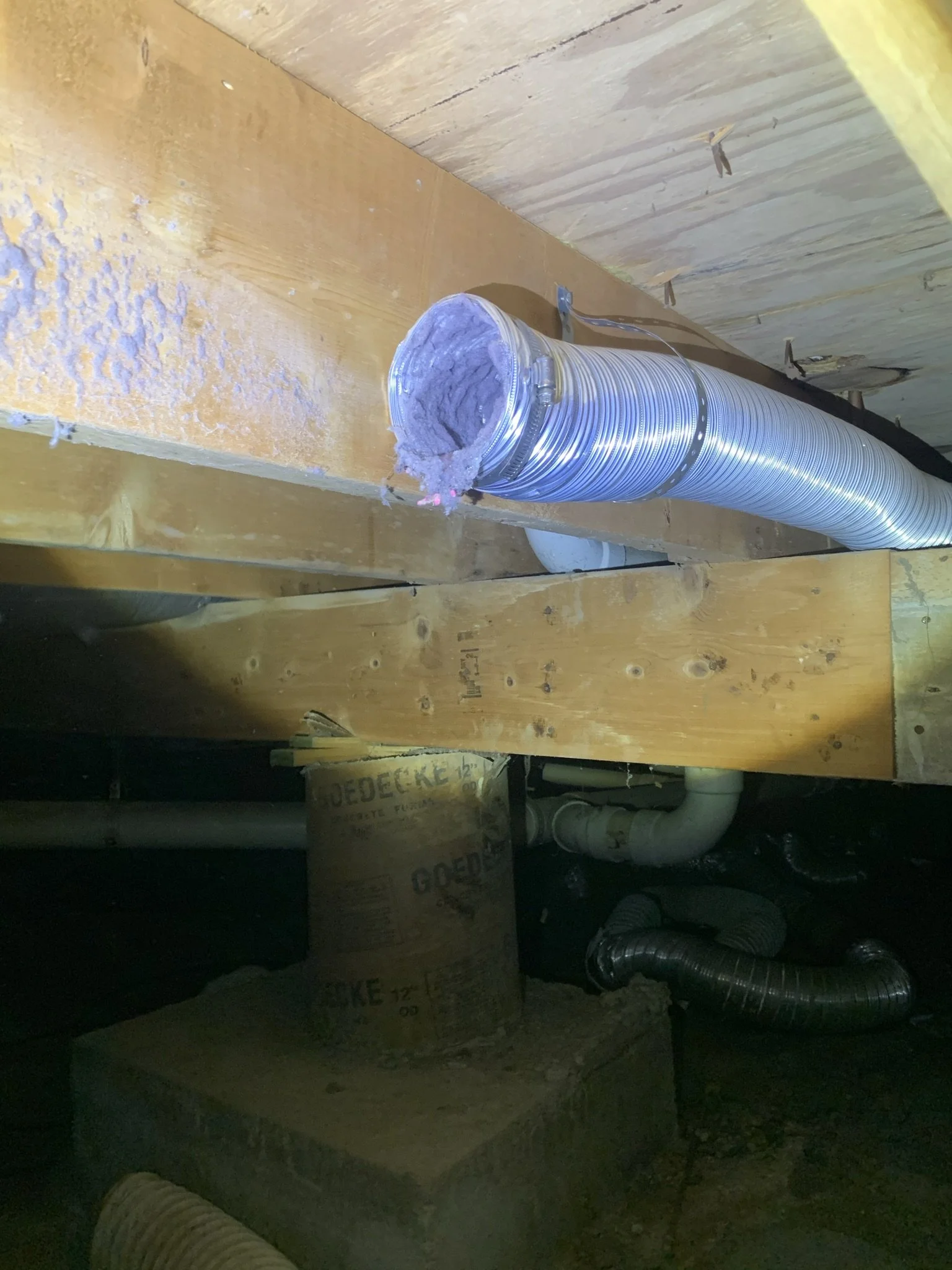
The Dangers of Improperly Installed Dryer Vents
Improperly installed vent runs can lead to disastrous consequences. Fires, mold growth, and carbon monoxide buildup are all dangers that stem from inadequate ventilation. To mitigate these risks, homeowners should regularly inspect their dryer vents for any signs of wear or blockage and consider professional installation if they’re unsure of the proper procedures.
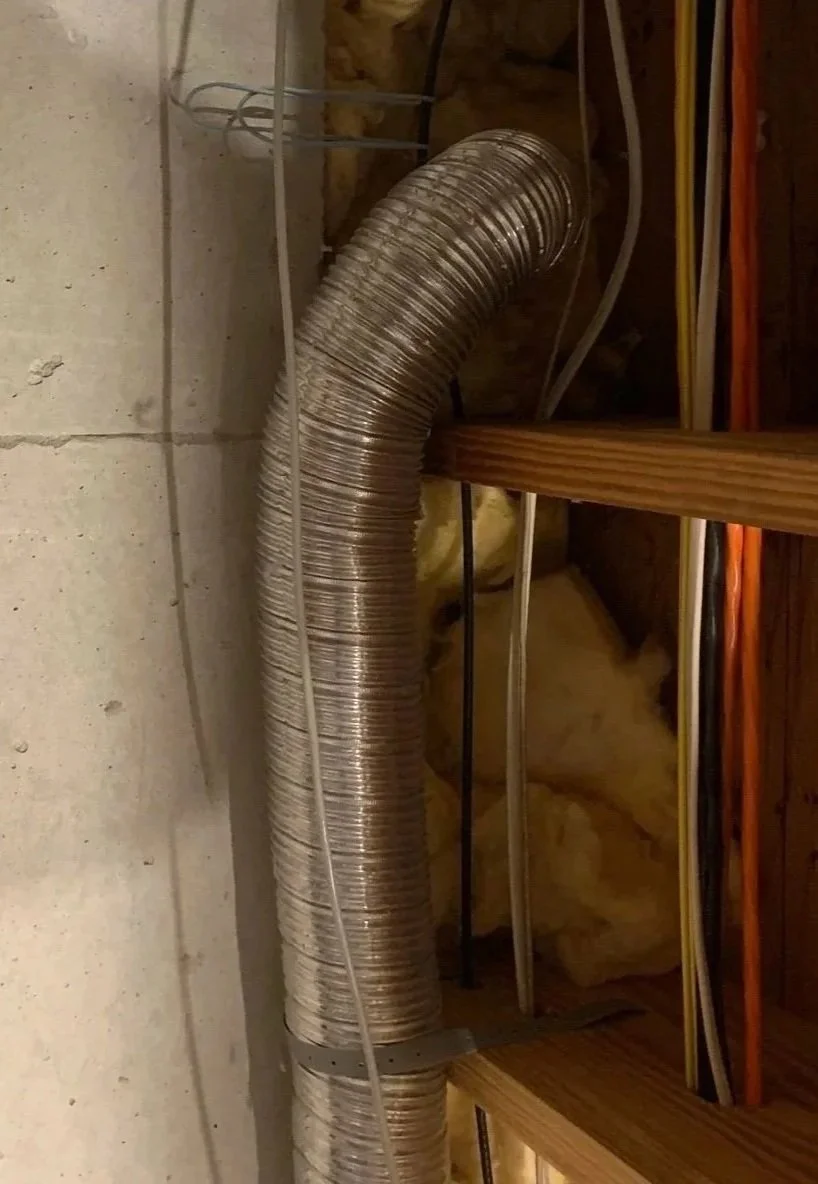
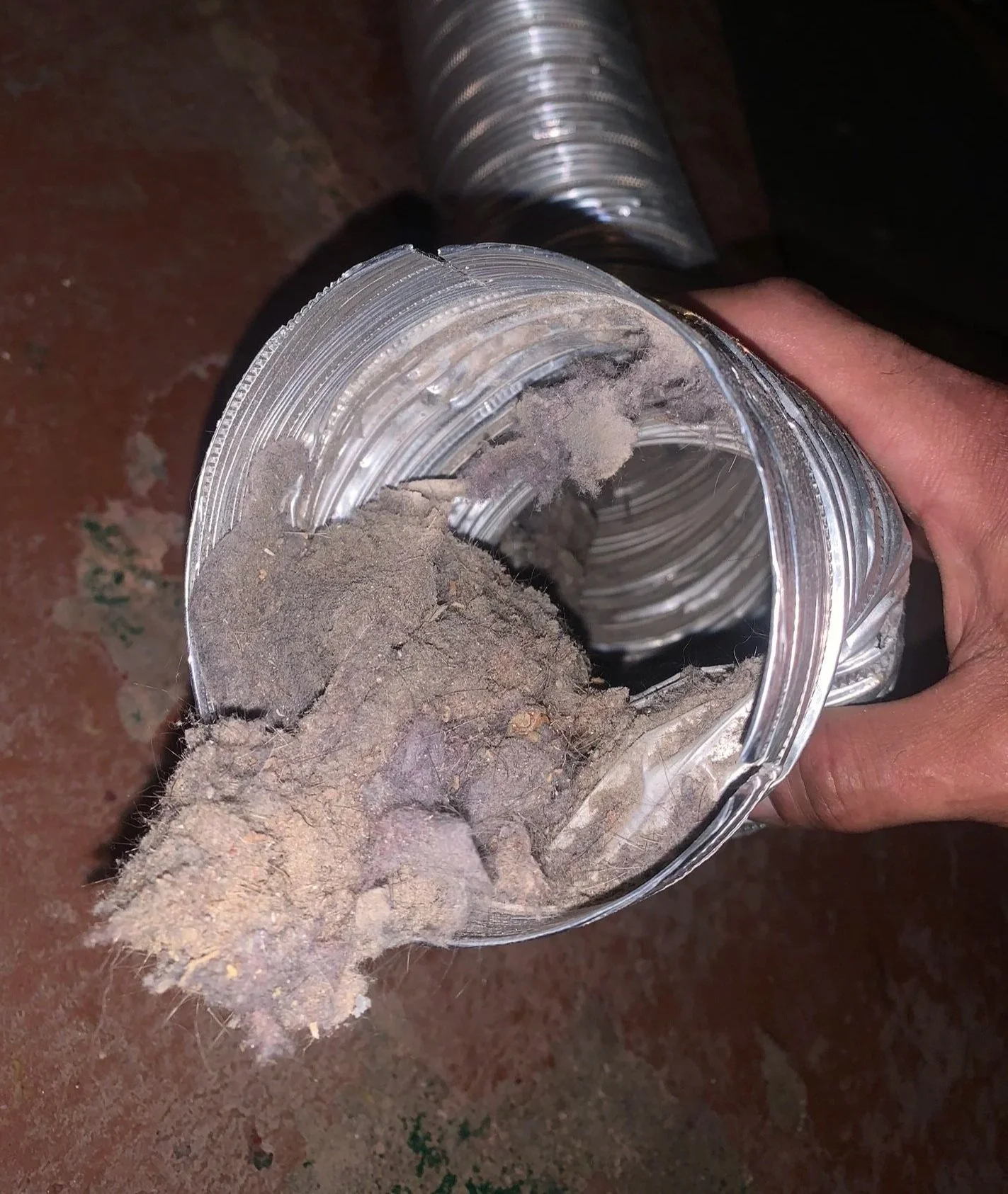
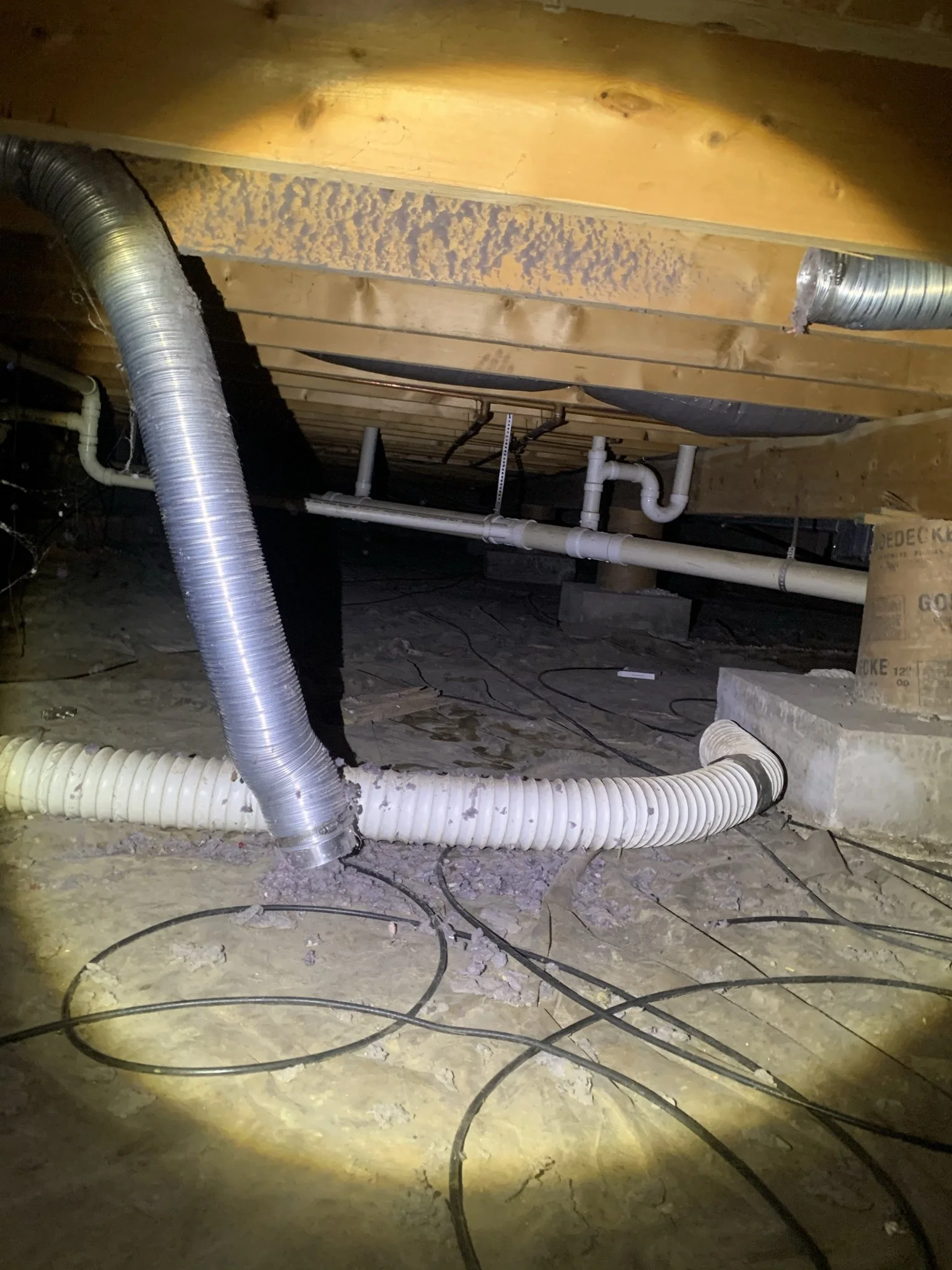
The Recommended Materials, Length and Connection Method
The choice of material is of utmost importance. While flexible materials might seem like a convenient option, they can easily kink, leading to lint buildup and reduced airflow. This not only impacts the efficiency of your dryer, resulting in longer drying times and increased energy bills, but also poses a significant fire hazard. The National Fire Protection Association (NFPA) reports that clogged dryer vents are a leading cause of house fires. For this reason, rigid metal ductwork is recommended, as it provides a smooth interior surface that minimizes the risk of lint accumulation.
The length of the vent run is another critical consideration. Ideally, the vent should be as short and straight as possible, typically not exceeding 25 feet. Longer runs can compromise airflow, increasing the risk of overheating and potential fire hazards. Additionally, connections should be secured with foil tape rather than screws or clamps, which can protrude into the duct and catch lint. A well-secured and taped connection ensures a continuous and unobstructed pathway for moisture and lint to escape.
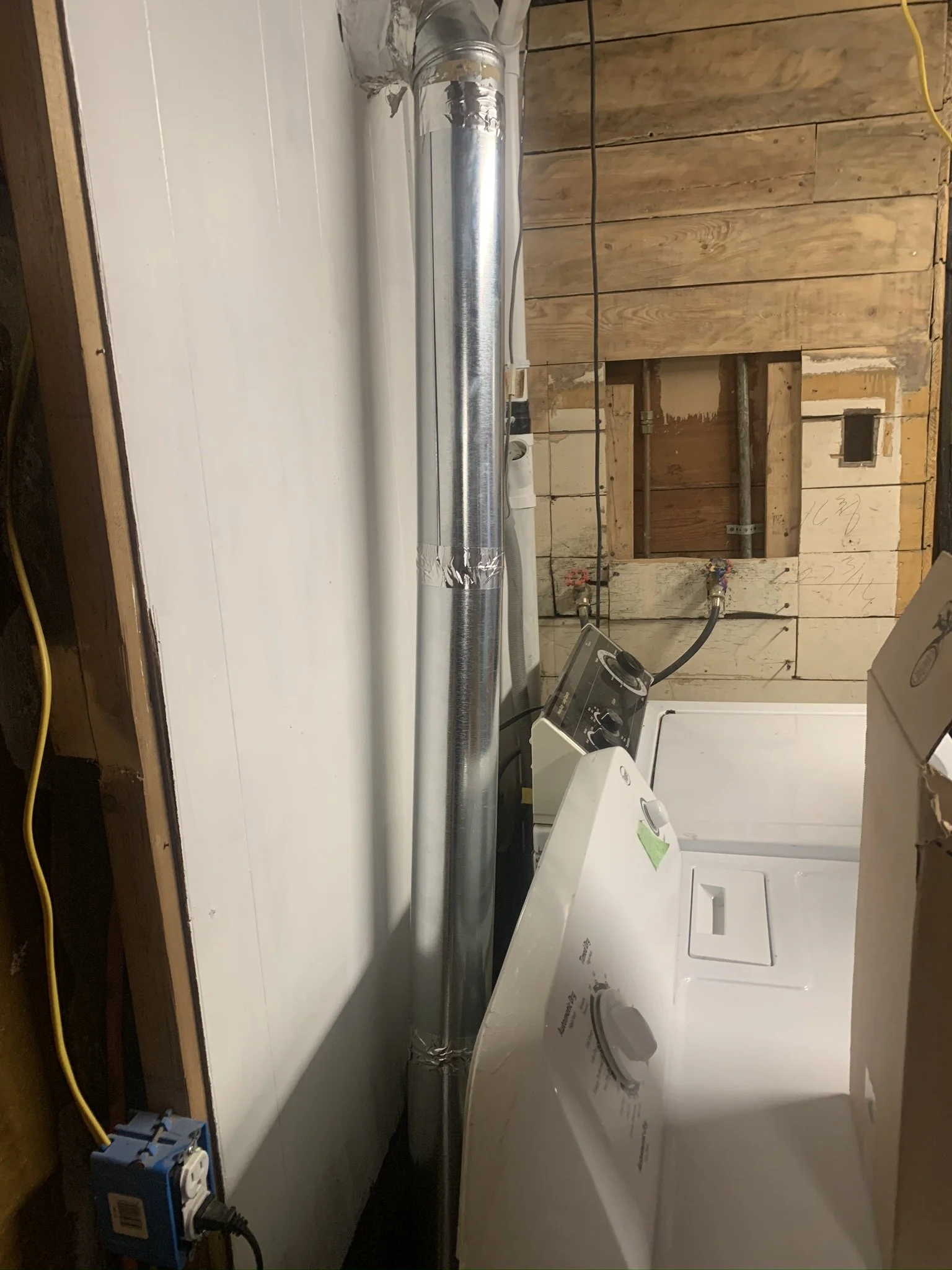
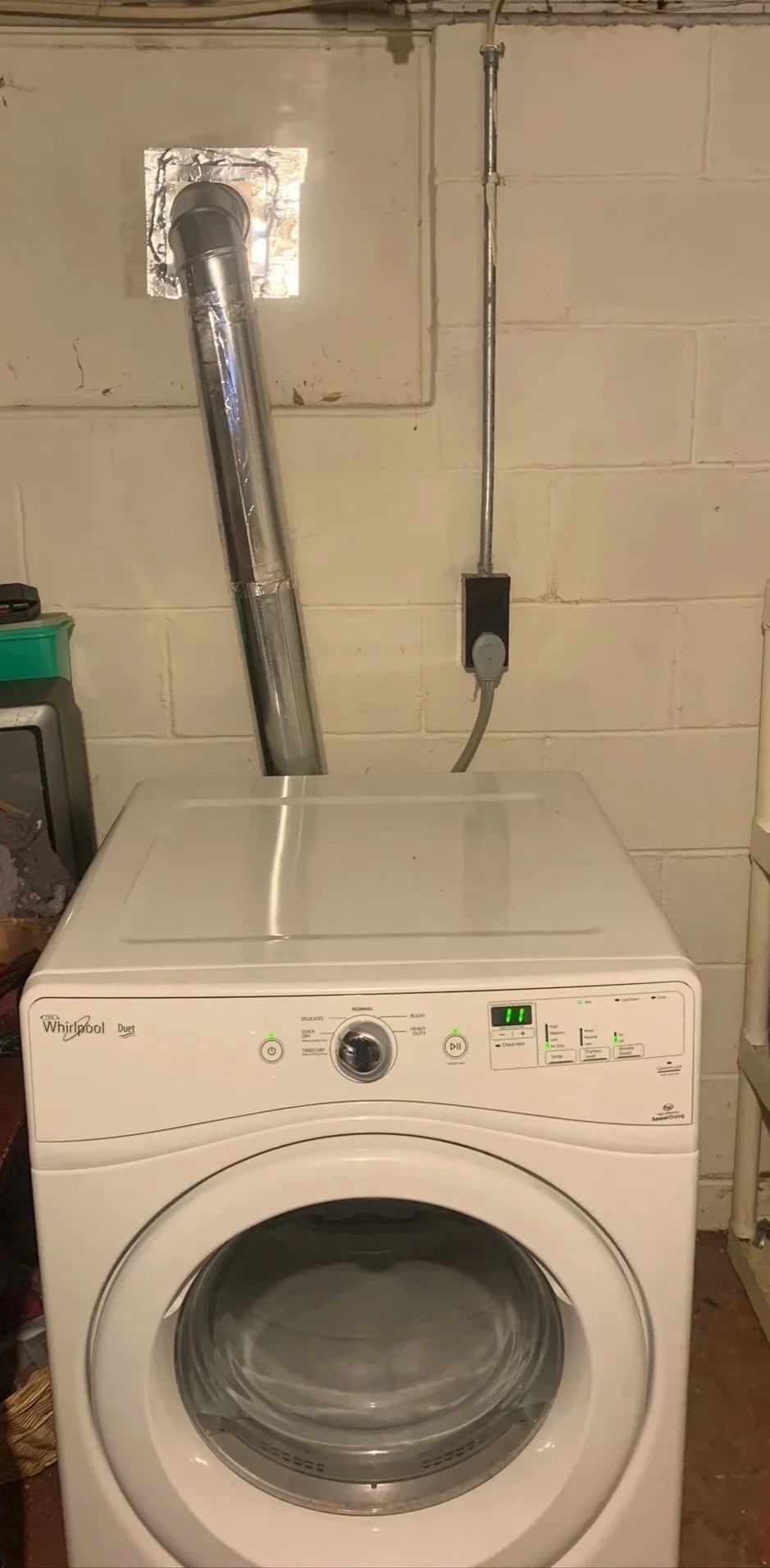
In conclusion, taking the time to ensure your dryer vent is properly installed with rigid materials, correct length, and securely taped connections is a small investment that yields significant benefits in terms of safety and efficiency. By doing so, you protect your home from potential hazards and prolong the life of your appliance, making it a win-win situation for both your safety and your wallet.